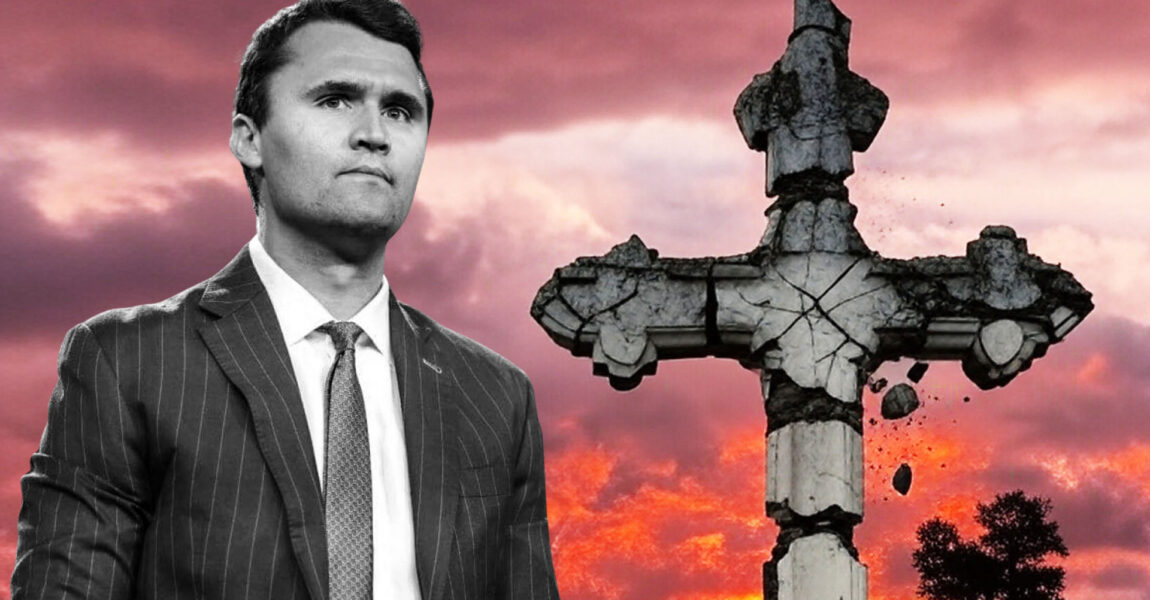
On September 10, 2025, Charlie Kirk, the prominent conservative activist and outspoken Christian, was fatally shot during a speaking event at Utah Valley University. What was described as a “political assassination” by Utah Governor Spencer Cox, sent shock waves through the nation, prompting an outpouring of grief, outrage, and—inevitably—prayers. As a devout Christian, Kirk’s life was steeped in faith, and his supporters, numbering in the millions, turned to prayer in the moments following the news, hoping for divine intervention for his survival. There was a frantic hour in which no one knew if he would live or die, only that he had been rushed to a nearby hospital. If there was a time for prayers to be answered, surely it was then. Yet, despite this massive, collective spiritual effort by his supporters, Kirk succumbed to his injuries. This raises a profound question: If millions were praying for a man of faith, why did those prayers go unanswered? The answer lies in the uncomfortable reality that prayer, while deeply meaningful to many, lacks any tangible, measurable power to alter outcomes in the physical world. Faced with such a harsh example of the failure of prayer, how can anyone consider it anything other than hopeless?
Prayer is a cornerstone of many religious traditions, particularly Christianity, which Kirk championed through his work with Turning Point USA and his public advocacy. For believers, prayer is a conduit to the divine, a way to seek comfort, guidance, or miraculous intervention. In the wake of Kirk’s shooting, countless individuals—his supporters, fellow Christians, and even those who disagreed with his politics but shared his faith—offered fervent prayers for his recovery. Social media platforms buzzed with hashtags like #PrayForCharlie, a common response to tragedies involving public figures. These prayers, heartfelt and sincere, reflect a human instinct to seek solace and hope in moments of crisis.
Yet, Kirk’s death at Timpanogos Regional Hospital, despite the best efforts of medical professionals and the spiritual appeals of his community, underscores a stark truth: prayer did not save him. The bullet that struck his neck, fired from an estimated 200 yards away, followed the laws of physics, not the whims of divine will. No amount of collective faith could alter the trajectory of that projectile or the biological reality of his injuries. This outcome forces us to confront the limits of prayer as a mechanism for effecting change in the material world.
Decades of scientific inquiry have sought to evaluate the efficacy of prayer, particularly intercessory prayer, where individuals pray for the well-being of others. Studies, such as the 2006 STEP (Study of the Therapeutic Effects of Intercessory Prayer) conducted by Harvard Medical School, have consistently found no statistically significant evidence that prayer improves health outcomes. In the STEP study, patients undergoing heart surgery who were prayed for by strangers showed no better recovery rates than those who were not. In some cases, patients aware of being prayed for experienced slightly worse outcomes, possibly due to added psychological pressure.
In Kirk’s case, the absence of divine intervention aligns with these findings. If millions prayed for his survival, as is plausible given his prominence and the Christian community’s response to such tragedies, the lack of a miracle suggests that prayer operates more as a psychological coping mechanism than a supernatural force. The shooter’s bullet, the hospital’s efforts, and Kirk’s ultimate fate were governed by physical and medical realities, not by the volume or intensity of spiritual appeals.
For believers, Kirk’s death despite widespread prayers may prompt theological wrestling. Some might argue it was “God’s plan,” a common refrain when prayers seem unanswered. Others might suggest that prayer’s purpose is not to change outcomes but to align oneself with divine will or provide comfort. Yet these explanations sidestep the central issue: if prayer is touted as a means of divine intervention, why does it so often fail to deliver in moments of dire need? Kirk, a vocal defender of Christian values, might have been seen as a prime candidate for a miracle, yet the outcome was no different than it might have been for a non-believer in similar circumstances.
This discrepancy highlights a broader issue: prayer’s power is often asserted in retrospect, with successes attributed to divine favor and failures rationalized as mysterious or purposeful. This selective reasoning undermines claims of prayer’s efficacy, as it renders the concept unfalsifiable. If both survival and death can be explained as God’s will, then prayer’s impact becomes impossible to measure or verify.
The impulse to pray in the face of events like Kirk’s shooting is deeply human. It offers a sense of agency in a chaotic world, a way to feel connected to others and to something greater. For Kirk’s supporters, prayer was likely a way to express love, solidarity, and hope, even as the outcome proved devastating. But acknowledging prayer’s emotional value does not equate to affirming its causal power. The medical team at Timpanogos Regional Hospital, the FBI’s investigation, and the physical evidence at the scene were the tangible forces at play, not the prayers of millions.
Kirk’s death also underscores the randomness and brutality of violence, which respects no ideology or faith. The shooter acted with precision and intent, and no spiritual force intervened to alter that reality. This tragedy, like countless others, reminds us that human actions—whether heroic, like the first responders, or horrific, like the assassin’s—shape our world far more directly than prayers ever could.
The Charlie Kirk shooting forces us to confront uncomfortable questions about faith, prayer, and the nature of divine intervention. While prayer may provide solace and community, its inability to save a prominent Christian like Kirk, despite the likely prayers of millions, exposes its uselessness as a tool for actual change. Instead of relying on spiritual appeals, the response to such tragedies lies in addressing the root causes of political violence—division, extremism—through concrete action and policy.
As the nation mourns Kirk and grapples with the ongoing investigation, let us reflect on what truly shapes our world: human choices, physical realities, and the courage to face hard truths. Prayer may comfort the grieving, but it is our collective actions—not our superstitions—that will determine the path forward.